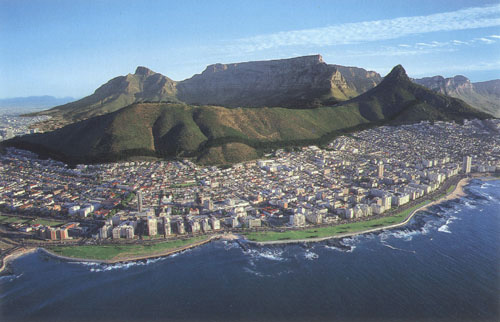
Cape Town
Urban Coastal BeachesCape Town sprawls across a dramatic peninsula where the Atlantic crashes against granite cliffs and Table Mountain rises like a sentinel over the city. Walk through the V&A Waterfront and you'll see fishing boats unloading their catch beside glass-fronted restaurants; head inland and the neighborhoods shift from colonial architecture to vibrant townships where street art covers every surface. The city pulses with creative energy—galleries, craft breweries, and music venues cluster in areas like Woodstock and Salt River, while the southern suburbs offer tree-lined streets and weekend markets. Table Mountain dominates the skyline and defines the landscape; on clear days the views from the top stretch across the peninsula to the Hottentots Holland Mountains. Cape Town's identity is inseparable from its geography: the meeting of two oceans, the wind that shapes daily life, the beaches that range from sheltered coves to wild Atlantic swells. The city has become a major hub for tech startups, creative professionals, and entrepreneurs drawn by the landscape, relatively low operating costs, and a culture that values innovation and outdoor living.
 BlueCross BlueShield Global Solutions
Get Quote
BlueCross BlueShield Global Solutions (BCBS) offers global health plans for international assignments or trips lasting 6 months or longer. With access to over 1.7M medical providers in 190 countries around the world, BCBS provides members with solutions and industry-leading digital services - ensuring top-quality coverage to people who live, work, study and travel internationally.
BlueCross BlueShield Global SolutionsBlueCross BlueShield Global Solutions (BCBS) offers global health plans for international assignments or trips lasting 6 months or longer. With access to over 1.7M medical providers in 190 countries around the world, BCBS provides members with solutions and industry-leading digital services - ensuring top-quality coverage to people who live, work, study and travel internationally.
Get Quote
Visa & Residency
Obtaining a residency in South Africa involves several steps and the process can be quite bureaucratic, but it is manageable with the right preparation. The most common types of visas for expats seeking residency are the Critical Skills Visa, General Work Visa, and Intra-Company Transfer Visa. The Critical Skills Visa is aimed at individuals who possess skills or qualifications deemed critical by the South African government. Applicants must provide proof of their qualifications and an evaluation by the South African Qualifications Authority. This visa can lead to permanent residency if certain conditions are met. The General Work Visa requires a job offer from a South African employer and the employer must prove that the position could not be filled by a South African citizen. The Intra-Company Transfer Visa is for employees who are being transferred by their current employer to a branch, affiliate, or subsidiary in South Africa. The process for each visa involves submitting a completed application form along with various supporting documents, such as a passport valid for at least 30 days after the intended return date, a yellow fever vaccination certificate if the applicant traveled through or was in a yellow fever endemic area, proof of financial means, and a medical and radiological report. The application is submitted to a South African embassy, consulate, or Department of Home Affairs office. The processing time can vary greatly, from several weeks to several months. It is recommended to start the application process well in advance of the intended move date. The difficulty of the process can depend on the type of visa and the individual's circumstances, but generally, it is considered to have an average level of difficulty compared to other countries.
Cost of Living
Living in Cape Town costs considerably less than major European or North American cities, though prices have climbed as the city has attracted international investment and remote workers. Accommodation ranges widely depending on neighborhood—the southern suburbs and waterfront command premium prices, while areas like Observatory, Woodstock, and the northern suburbs offer better value. Dining, entertainment, and domestic help remain affordable by global standards, though imported goods and certain services carry a premium due to shipping and local economics.
Weather
Cape Town has a Mediterranean climate with warm, dry summers (November to March) and mild, wet winters (June to August). The famous Cape Town wind, particularly strong in spring, can be intense but also keeps the air clear and the city feeling alive.
Healthcare in Cape Town
Groote Schuur Hospital and Conradie Hospital provide public sector emergency and specialist care, while private facilities including Mediclinic Cape Town and Netcare Christiaan Barnard Memorial Hospital serve those with insurance. Response times and equipment quality vary significantly between public and private systems, with private hospitals generally offering shorter wait times and more modern facilities. Medical tourism has established Cape Town as a destination for certain procedures, indicating availability of specialized expertise.
Schools in Cape Town
Cape Town has several established international schools including Camps Bay Primary School (IB curriculum), Reddam House (British-influenced), and Westerford High School (IB). Most follow either the British or International Baccalaureate systems and cater to expat families, though fees are substantially higher than local public schools.
Bilingual education options exist primarily through Afrikaans-English programs at schools like Camps Bay Primary and select private institutions. French-English bilingual options are limited but available through smaller independent schools in the southern suburbs.
Restaurants in Cape Town