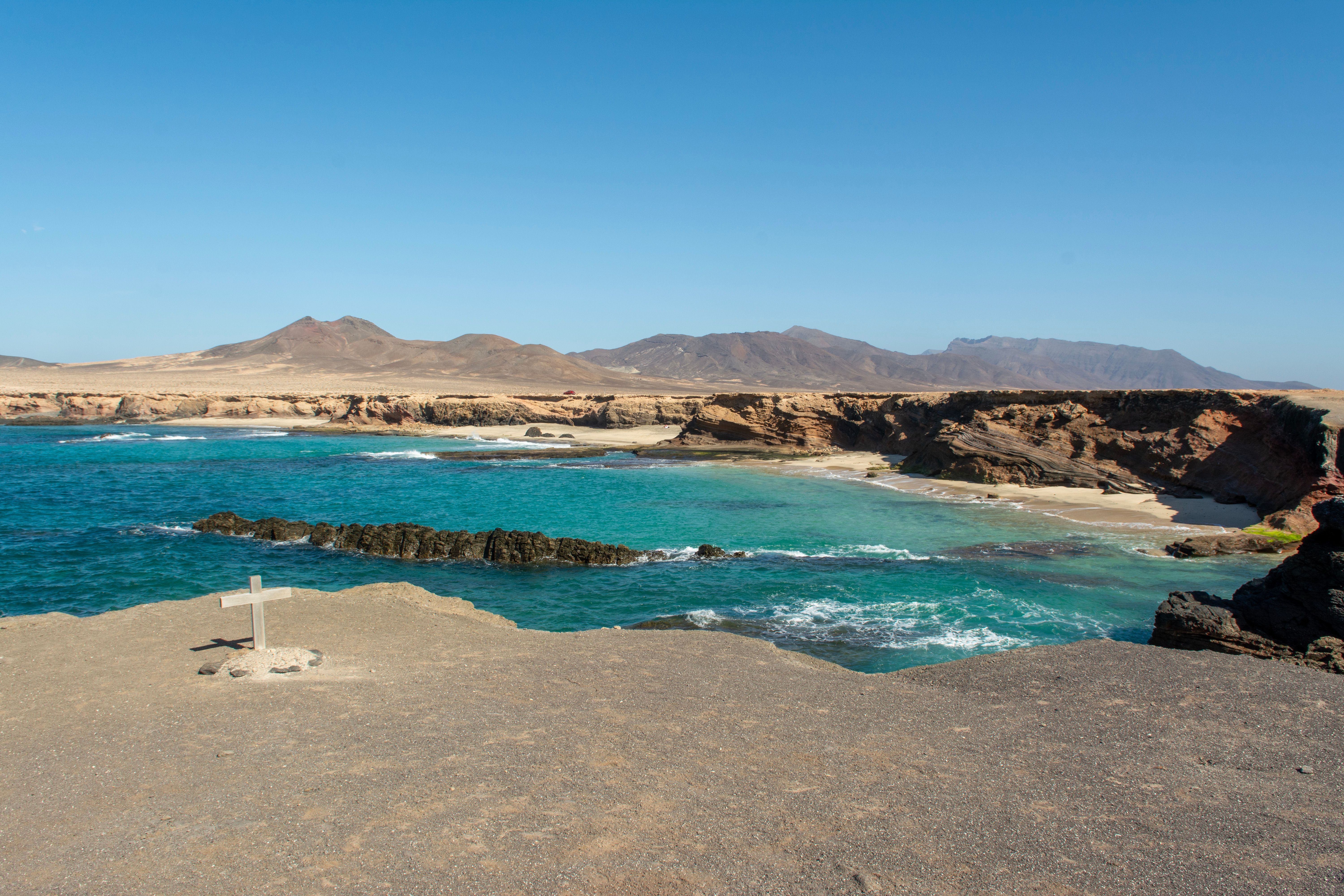

Fuerteventura
Beach Coastal BeachesFuerteventura is the second-largest island in the Canary Islands archipelago, located off the northwest coast of Africa. Known for its dramatic volcanic landscapes and pristine natural beauty, the island features vast stretches of golden sand dunes, particularly in the south, alongside rugged volcanic terrain and windswept plateaus. The island has a sparse population concentrated in towns like Puerto del Rosario, the capital, and Corralejo in the north. Fuerteventura is characterized by its arid climate and minimal vegetation, creating a stark, otherworldly landscape that attracts visitors seeking solitude and natural beauty. The island is renowned for its exceptional beaches, ranging from sheltered coves to expansive sandy shores perfect for water sports. Despite its remote location, Fuerteventura has developed tourism infrastructure while maintaining much of its unspoiled character. The island's economy has historically relied on fishing and agriculture, though tourism now plays a significant role. Fuerteventura offers a laid-back lifestyle with a strong connection to the sea and outdoor activities, making it appealing to those seeking escape from urban environments.

SJB GlobalConnect
SJB-Global is a top-rated financial advisory firm specializing in expat financial advice worldwide, offering retirement planning & tax-efficient solutions with a regressive fee model. Our clients benefit from their country’s most favorable tax environment by utilizing the efficient investment vehicles we offer. Our commitment to quality service is reflected in our stellar reviews, with over 300 testimonials boasting 95% five-star ratings.
Click connect to have our partner contact you via e-mail and/or phone.
SJB GlobalSJB-Global is a top-rated financial advisory firm specializing in expat financial advice worldwide, offering retirement planning & tax-efficient solutions with a regressive fee model. Our clients benefit from their country’s most favorable tax environment by utilizing the efficient investment vehicles we offer. Our commitment to quality service is reflected in our stellar reviews, with over 300 testimonials boasting 95% five-star ratings.
Connect
Click connect to have our partner contact you via e-mail and/or phone.
Visa & Residency
Obtaining a residency in Spain can be a straightforward process, but it requires careful preparation and attention to detail. The most common types of residency visas that expats apply for are the Non-Lucrative Visa and the Golden Visa. The Non-Lucrative Visa is ideal for individuals who can support themselves without working, such as retirees or remote workers. To apply for this visa, applicants must prove they have sufficient financial means to live in Spain without income from employment, provide proof of private health insurance, and have a clean criminal record. The visa is initially granted for one year and can be renewed for two-year periods, provided the requirements are still met. After five years of legal residency, applicants can apply for long-term residency or even Spanish citizenship. The Golden Visa, on the other hand, is aimed at investors. It requires a significant investment in Spain, such as purchasing real estate worth at least €500,000, investing €1 million in Spanish companies, or depositing €1 million in a Spanish bank. The Golden Visa offers a fast track to residency and is particularly popular among non-EU nationals. It grants residency for two years, which is renewable for five-year periods, and eventually leads to permanent residency and citizenship if desired. The application process for both visas involves submitting the necessary documentation to the Spanish consulate or embassy in the applicant's home country. After the initial approval, the applicant will receive a visa that allows them to enter Spain. Upon arrival, they must apply for a Foreigner Identity Card (TIE) at the local office or police station. The process can be complex and time-consuming, often requiring translations and apostilles for official documents. It is recommended to seek legal advice or assistance from immigration professionals to navigate the process successfully. Overall, while the process is manageable, it does require thorough preparation and understanding of the Spanish immigration system.
Cost of Living
The cost of living in Fuerteventura is moderate, generally lower than mainland Spain and other popular European destinations. Accommodation, dining, and daily expenses are reasonable, though prices in tourist areas and for imported goods can be higher than in less developed regions.
Weather
Fuerteventura has a subtropical desert climate with warm, sunny weather year-round and minimal rainfall. Temperatures are mild in winter and warm in summer, with consistent trade winds that make the island popular for windsurfing and kitesurfing.
Healthcare in Fuerteventura
Fuerteventura has basic-to-moderate healthcare coverage, with the main hospital services concentrated around Puerto del Rosario and smaller clinics in other towns. For specialized treatment or complex emergencies, patients are often transferred to larger facilities on Gran Canaria or mainland Spain.
Schools in Fuerteventura
Fuerteventura has a small number of international-school options, mainly serving expatriate families and offering multilingual or international curricula rather than a large network of standalone IB/American/British schools. Availability can vary by area, so families often look at schools in the main towns and nearby islands as part of their search.
Yes, Fuerteventura has bilingual schools, especially in the public and semi-private sectors, where Spanish is combined with English in some programs. These schools are generally aimed at improving English proficiency while following the Spanish curriculum.