
Astorga
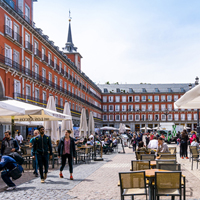
Country RiverfrontAstorga is a historic city located in the province of León in the autonomous community of Castile and León in northwestern Spain. The city is renowned for its rich medieval heritage and architectural significance, serving as an important stop along the Way of Saint James (Camino de Santiago), one of Europe's most famous pilgrimage routes. Astorga's old town features narrow cobblestone streets lined with traditional stone buildings that reflect centuries of history. The city is particularly famous for its stunning Cathedral, a Gothic masterpiece begun in the 15th century, and the Episcopal Palace, an extraordinary modernist structure designed by renowned architect Antoni Gaudí. The palace showcases Gaudí's distinctive architectural style with its dramatic towers and intricate details. Beyond its architectural treasures, Astorga maintains a vibrant local culture with traditional markets, local cuisine, and artisanal crafts. The city serves as a cultural and commercial hub for the surrounding region, offering visitors and residents a blend of historical significance and contemporary amenities. Its strategic location on the Camino de Santiago makes it a vital waypoint for pilgrims from around the world, contributing to its international character while maintaining its authentic Spanish charm.
BlueCross BlueShield Global SolutionsGet Quote
BlueCross BlueShield Global Solutions (BCBS) offers global health plans for international assignments or trips lasting 6 months or longer. With access to over 1.7M medical providers in 190 countries around the world, BCBS provides members with solutions and industry-leading digital services - ensuring top-quality coverage to people who live, work, study and travel internationally.
BlueCross BlueShield Global SolutionsBlueCross BlueShield Global Solutions (BCBS) offers global health plans for international assignments or trips lasting 6 months or longer. With access to over 1.7M medical providers in 190 countries around the world, BCBS provides members with solutions and industry-leading digital services - ensuring top-quality coverage to people who live, work, study and travel internationally.
Get Quote
Visa & Residency
Obtaining a residency in Spain can be a straightforward process, but it requires careful preparation and attention to detail. The most common types of residency visas that expats apply for are the Non-Lucrative Visa and the Golden Visa. The Non-Lucrative Visa is ideal for individuals who can support themselves without working, such as retirees or remote workers. To apply for this visa, applicants must prove they have sufficient financial means to live in Spain without income from employment, provide proof of private health insurance, and have a clean criminal record. The visa is initially granted for one year and can be renewed for two-year periods, provided the requirements are still met. After five years of legal residency, applicants can apply for long-term residency or even Spanish citizenship. The Golden Visa, on the other hand, is aimed at investors. It requires a significant investment in Spain, such as purchasing real estate worth at least €500,000, investing €1 million in Spanish companies, or depositing €1 million in a Spanish bank. The Golden Visa offers a fast track to residency and is particularly popular among non-EU nationals. It grants residency for two years, which is renewable for five-year periods, and eventually leads to permanent residency and citizenship if desired. The application process for both visas involves submitting the necessary documentation to the Spanish consulate or embassy in the applicant's home country. After the initial approval, the applicant will receive a visa that allows them to enter Spain. Upon arrival, they must apply for a Foreigner Identity Card (TIE) at the local office or police station. The process can be complex and time-consuming, often requiring translations and apostilles for official documents. It is recommended to seek legal advice or assistance from immigration professionals to navigate the process successfully. Overall, while the process is manageable, it does require thorough preparation and understanding of the Spanish immigration system.
Cost of Living
The cost of living in Astorga is low compared to major Spanish cities, making it an affordable destination for residents and visitors. Housing, dining, and general expenses are reasonable, reflecting its status as a mid-sized provincial city rather than a major metropolitan area.
Weather
Astorga experiences a continental climate with cold winters and warm summers, with moderate rainfall throughout the year typical of northwestern Spain.
Healthcare in Astorga
Astorga is served by the Hospital de Astorga, which provides general medical services and emergency care to residents and visitors. The facility offers basic to intermediate healthcare services, though more specialized treatments may require travel to larger regional hospitals in León. The city also has several primary care clinics and pharmacies throughout the town.