
Tanzania
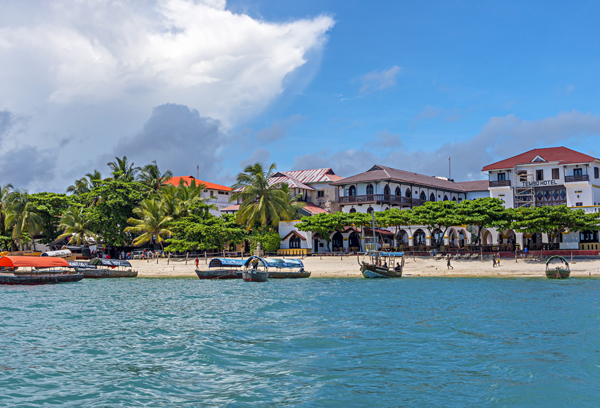
Coastal BeachesTanzania is a large East African country known for its diverse landscapes, wildlife, and cultural heritage. It is home to Mount Kilimanjaro, Africa's highest peak, and the vast Serengeti ecosystem famous for its annual wildlife migration. The country has a rich cultural tapestry with over 120 ethnic groups, each with distinct traditions and languages, though Swahili and English are widely spoken. Tanzania's economy is primarily based on agriculture, mining, and tourism, with growing sectors in manufacturing and services. The country offers a mix of urban development in cities like Dar es Salaam and Dodoma, alongside rural communities and pristine natural areas. Life in Tanzania combines modern amenities in major cities with a slower pace and strong community-oriented culture in smaller towns and villages.

SJB GlobalConnect
SJB-Global is a top-rated financial advisory firm specializing in expat financial advice worldwide, offering retirement planning & tax-efficient solutions with a regressive fee model. Our clients benefit from their country’s most favorable tax environment by utilizing the efficient investment vehicles we offer. Our commitment to quality service is reflected in our stellar reviews, with over 300 testimonials boasting 95% five-star ratings.
Click connect to have our partner contact you via e-mail and/or phone.
SJB GlobalSJB-Global is a top-rated financial advisory firm specializing in expat financial advice worldwide, offering retirement planning & tax-efficient solutions with a regressive fee model. Our clients benefit from their country’s most favorable tax environment by utilizing the efficient investment vehicles we offer. Our commitment to quality service is reflected in our stellar reviews, with over 300 testimonials boasting 95% five-star ratings.
Connect
Click connect to have our partner contact you via e-mail and/or phone.
Podcasts
Episode 8: Jake Barber - The Expat Finance Expert Returns
Episode 6: Jake Barber - Expat Finance Expert and Lifelong Expat
Living in Tanzania
Best Places to Live in Tanzania
Visa & Residency
Obtaining a residency in Tanzania involves several steps and can be moderately challenging, depending on the type of visa and the applicant's circumstances. There are three main types of residence permits: Residence Permit Class A, which is for foreign nationals who are employed in Tanzania; Residence Permit Class B, for investors; and Residence Permit Class C, which covers various categories including missionaries, researchers, and volunteers. To apply for a Residence Permit Class A, an expat must first secure a job in Tanzania. The employer is typically responsible for applying for the work permit on behalf of the employee. The process involves submitting various documents, including a completed application form, a valid passport, a curriculum vitae, certified copies of academic certificates, and a job description outlining the responsibilities of the position. For Residence Permit Class B, investors must submit proof of their investment in Tanzania, which should align with the country's investment priorities. They must also provide documentation such as a business plan, certificate of incorporation, tax clearance certificates, and proof of capital. Residence Permit Class C applicants must provide documentation relevant to their specific activities, such as letters from sponsoring organizations for missionaries or researchers. All applicants must also undergo a medical examination and provide a report with their application. The department then reviews the application, which can take several weeks or even months. Once approved, the applicant will receive a residence permit, which is typically valid for one to two years and can be renewed. For digital nomads, the most common approach is to enter Tanzania on a Tourist Visa or a Business Visa. The Tourist Visa is relatively straightforward to obtain, either on arrival or through a Tanzanian embassy or consulate prior to travel. The Business Visa requires an invitation letter from a host company in Tanzania and is intended for those who are visiting for short-term business-related activities. Overall, while the process can be bureaucratic and time-consuming, it is generally manageable with the proper preparation and documentation. Expats are advised to begin the application process well in advance of their intended move date to allow for any delays.
Healthcare in Tanzania
The system in Tanzania is a mix of public and private facilities. The public healthcare system is widely accessible but often under-resourced, with limited medical supplies, equipment, and personnel, especially in rural areas. Private healthcare provides higher quality services but at a significantly higher cost, making it less accessible to the general population. The quality of healthcare varies greatly between urban and rural areas, with urban centers like Dar es Salaam having better facilities. Expats and digital nomads can access public healthcare, but many opt for private health insurance to use private clinics and hospitals, which offer a higher standard of care. Public healthcare is often free or low-cost, but long wait times and shortages can be an issue. Private healthcare is expensive, and costs can vary widely depending on the treatment.
Cost of Living
Tanzania has a relatively low cost of living compared to Western countries and many African nations. Rental prices vary significantly by location, with a one-bedroom apartment in Dar es Salaam city center averaging $400-800 USD monthly, while outside the center it drops to $250-400. Property purchases range from $1,500-3,000 USD per square meter in urban areas to much less in rural regions. Daily expenses for food, transportation, and utilities are affordable, making it an economical destination for expatriates willing to live modestly.
Weather
Tanzania experiences a tropical to subtropical climate with two main rainy seasons: the long rains from March to May and the short rains from November to December. The dry season runs from June to October, offering the best weather for tourism and outdoor activities. Temperatures vary by altitude and region, with coastal areas remaining warm year-round (25-30°C) while highland regions are cooler. Humidity is generally high, particularly during rainy seasons and in coastal areas.
Educational System in Tanzania
The educational system in Tanzania is structured to provide basic, secondary, and higher education. The system is overseen by the Ministry of Education, Science and Technology. Education in Tanzania is compulsory for seven years, that is, for the duration of primary education. Children typically start school at the age of seven. Primary education is followed by secondary education, which is divided into ordinary level (O-level) for four years and advanced level (A-level) for two years. Students who complete O-level education may choose to enter the workforce, enroll in vocational training, or continue to A-level education, which can lead to university admission. The academic year in Tanzania usually runs from January to November. The quality of education can vary significantly, with urban schools often better resourced than rural ones. The government has been working to improve the educational system by increasing access to education and improving the quality of teaching. English is the language of instruction in secondary schools, while Swahili is used in primary schools. This can be a challenge for students transitioning from primary to secondary education. Parents moving to Tanzania from another country should be aware that there are also available, which follow different curricula such as the British, American, or International Baccalaureate (IB) systems.
Universities in Tanzania
The university system in Tanzania consists of both public and private institutions, with the University of Dar es Salaam being the oldest and most prestigious. Higher education typically begins with a bachelor's degree, which usually takes three to four years to complete. Following that, students can pursue postgraduate education, including master's degrees (one to two years) and doctoral degrees (three to five years). The academic year is divided into two semesters. Admission to universities is competitive and is based on the performance in the A-level examinations or equivalent qualifications. Foreign students are welcome to study in Tanzania, and they are usually required to have their qualifications validated by the Tanzania Commission for Universities (TCU). English is the medium of instruction in most higher education institutions. The cost of university education for international students can vary depending on the institution and the program of study. Living costs in Tanzania are relatively low compared to many Western countries, but international students should budget for tuition, accommodation, and personal expenses. Scholarships and financial aid may be available for international students, but these are competitive. It is advisable for prospective students or parents to contact the universities directly for the most accurate and up-to-date information on fees and expenses.