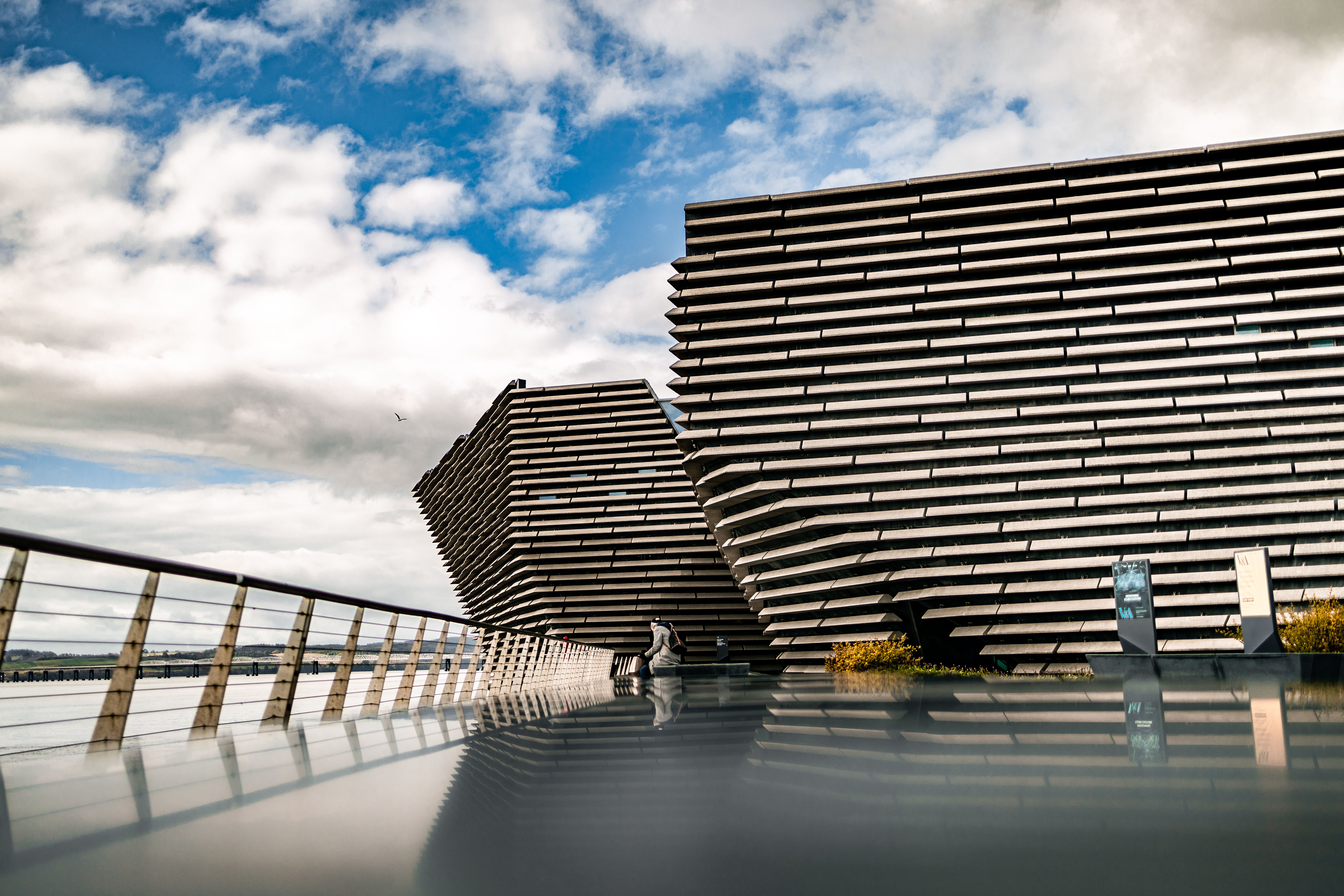
Dundee
Urban Coastal RiverfrontDundee transformed itself from a 19th-century industrial powerhouse—built on jute mills, shipbuilding, and jam production—into a modern waterfront city that honors its gritty past while pushing toward the future. Sitting on the north bank of the Tay estuary, Dundee has reinvented its identity around culture and innovation. The V&A Museum of Design, opened in 2018, became an architectural landmark that signaled the city's ambitions beyond nostalgia. Today the city balances Victorian tenements and Edwardian villas with contemporary developments, creative studios, and a growing tech sector. The waterfront, once dominated by industrial activity, now draws walkers and cyclists along regenerated paths. Dundee's compact size makes it navigable on foot, with a genuine city center rather than sprawl. The university presence keeps the place young and intellectually engaged. It's a city that doesn't pretend to be something it isn't—the industrial heritage remains visible in the architecture and the local character—but it's actively building something new.
 BlueCross BlueShield Global Solutions
Get Quote
BlueCross BlueShield Global Solutions (BCBS) offers global health plans for international assignments or trips lasting 6 months or longer. With access to over 1.7M medical providers in 190 countries around the world, BCBS provides members with solutions and industry-leading digital services - ensuring top-quality coverage to people who live, work, study and travel internationally.
BlueCross BlueShield Global SolutionsBlueCross BlueShield Global Solutions (BCBS) offers global health plans for international assignments or trips lasting 6 months or longer. With access to over 1.7M medical providers in 190 countries around the world, BCBS provides members with solutions and industry-leading digital services - ensuring top-quality coverage to people who live, work, study and travel internationally.
Get Quote
Visa & Residency
Obtaining a residency in Scotland, which is part of the United Kingdom, involves navigating the UK's system. The process can be complex, but it is well-documented and manageable for most expats. The most common types of visas that expats apply for are the Tier 2 Visa, which is for skilled workers with a job offer in the UK, and the Tier 1 Visa, which includes categories like the Global Talent Visa for leaders in certain fields, the Investor Visa for high-net-worth individuals, and the Entrepreneur Visa for those starting or running businesses in the UK. To apply for a Tier 2 Visa, an individual must have a job offer from a UK employer who holds a valid Tier 2 sponsorship license. The job offer must meet the minimum salary threshold and the role should be at a certain skill level. The applicant also needs to prove their knowledge of English and have enough savings to support themselves without accessing public funds. The Tier 1 Visa categories have different requirements. For example, the Global Talent Visa requires the applicant to be endorsed by a recognized UK body as a leader or potential leader in their field. The Investor Visa requires a substantial financial investment in the UK, while the Entrepreneur Visa requires a viable business plan and investment funds. Digital nomads often use the Standard Visitor visa, which allows them to stay in the UK for up to 6 months. This visa is not specifically designed for digital nomads, and it does not allow them to work in the UK, but it can be used for business-related activities such as attending meetings or conferences. The application process for UK visas typically involves completing an online application form, providing various supporting documents, paying the visa fee, and attending an appointment at a visa application center for biometrics. The processing time can vary, but it generally takes a few weeks for a decision to be made. It is important to note that the UK's immigration rules are subject to change, so applicants should always check the latest requirements on the official UK government website. Overall, while the process can be detailed and requires careful preparation, it is considered average in terms of difficulty compared to other countries.
Cost of Living
Housing and everyday expenses in Dundee remain considerably more affordable than Edinburgh or Glasgow, making it attractive to young professionals and families seeking Scottish city life without premium pricing. Rental accommodation, groceries, and dining out cost noticeably less than larger UK cities, though prices have gradually risen as the city's cultural profile has grown. Local wages tend to be lower than the UK average, but the overall cost-to-income ratio remains favorable for residents.
Weather
Dundee experiences a temperate maritime climate with cool, often wet winters and mild summers; expect frequent cloud cover and rain throughout the year, typical of eastern Scotland.
Healthcare in Dundee
Ninewells Hospital, the region's major teaching hospital affiliated with the University of Dundee, handles acute care and emergency services. NHS Tayside operates additional community clinics and GP practices throughout the city. Wait times for non-emergency procedures align with broader NHS Scotland standards, though A&E can experience seasonal pressure.
Schools in Dundee
Restaurants in Dundee