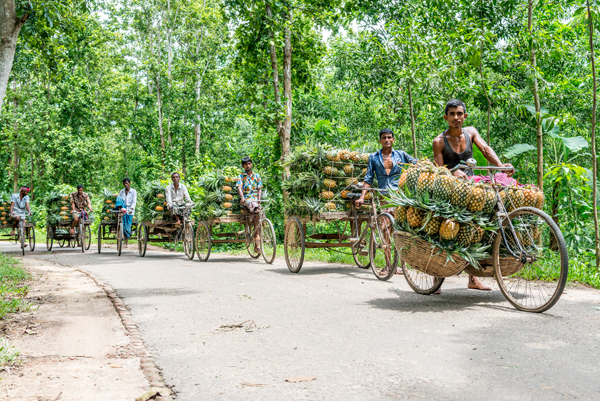
Bangladesh
Coastal BeachesBangladesh is a South Asian nation located in the Ganges Delta region, bordered by India and Myanmar, with a coastline along the Bay of Bengal. The country is characterized by its densely populated landscape, fertile plains, and significant river systems that have shaped its history and culture for millennia. Bengali culture is rich and vibrant, known for literature, music, cinema, and traditional arts that have influenced the broader South Asian region. The economy is primarily driven by agriculture, textiles, and garment manufacturing, making it one of the world's largest apparel exporters. Bangladesh has experienced rapid economic growth and urbanization in recent decades, particularly in cities like Dhaka and Chittagong. Life in Bangladesh offers a blend of traditional values and modern development, with warm hospitality, affordable living costs, and a strong sense of community.
 BlueCross BlueShield Global Solutions
Get Quote
BlueCross BlueShield Global Solutions (BCBS) offers global health plans for international assignments or trips lasting 6 months or longer. With access to over 1.7M medical providers in 190 countries around the world, BCBS provides members with solutions and industry-leading digital services - ensuring top-quality coverage to people who live, work, study and travel internationally.
BlueCross BlueShield Global SolutionsBlueCross BlueShield Global Solutions (BCBS) offers global health plans for international assignments or trips lasting 6 months or longer. With access to over 1.7M medical providers in 190 countries around the world, BCBS provides members with solutions and industry-leading digital services - ensuring top-quality coverage to people who live, work, study and travel internationally.
Get Quote
Podcasts

Episode 6: Jake Barber - Expat Finance Expert and Lifelong Expat


Episode 8: Jake Barber - The Expat Finance Expert Returns
Living in Bangladesh
Best Places to Live in Bangladesh
Visa & Residency
Obtaining a residency in Bangladesh involves several steps and the process can be somewhat bureaucratic, but it is manageable with the right preparation. Expats looking to reside in Bangladesh typically apply for either a B visa (Business Visa) or an E visa (Employment Visa), depending on the nature of their stay. The B visa is suitable for those who are involved in business activities in Bangladesh. To apply for a B visa, expats must have an invitation from a Bangladeshi company and provide documents such as a letter from their own company, proof of financial solvency, and a return ticket. The E visa is for those who have secured employment in Bangladesh, and applicants need an employment contract, a letter from the employer, and relevant academic and professional certificates. The application process generally starts with the expat submitting a visa application form along with the necessary supporting documents to the nearest Bangladeshi diplomatic mission. The processing time can vary, but it usually takes several weeks. Once in Bangladesh, expats must apply for a work permit through the Bangladesh Investment Development Authority (BIDA) if they are on a B visa, or through the Department of and Passports if they are on an E visa. After obtaining the work permit, expats can apply for a residence permit, which allows them to stay in Bangladesh for the duration of their work assignment. This involves a medical check-up and further paperwork. The overall difficulty of the process is considered average, but it can be time-consuming and requires attention to detail to ensure all requirements are met. Expats are advised to seek assistance from their sponsoring company or a legal professional to navigate the process smoothly.
Healthcare in Bangladesh
The system in Bangladesh consists of both public and private healthcare sectors. The public healthcare system is widely accessible and provides services at minimal to no cost, but it often suffers from overcrowding, limited resources, and varying levels of service quality. In contrast, the private healthcare sector is known for better facilities and shorter waiting times, but it is more expensive and thus less accessible to the lower-income population. The quality of healthcare can significantly differ between urban and rural areas, with urban centers having more advanced medical facilities. Expats and digital nomads can access public healthcare, but many opt for private healthcare due to higher quality services and better facilities. It is advisable for expats and digital nomads to have health insurance that covers private healthcare costs.
Cost of Living
Bangladesh offers one of the most affordable costs of living in South Asia. Rental housing in Dhaka ranges from $150-400 USD monthly for modest apartments in residential areas to $800+ for upscale accommodations, while outside major cities costs are significantly lower. Property purchase prices average $1,000-3,000 USD per square meter in urban centers. Daily expenses including food, transportation, and utilities are very economical, with a comfortable lifestyle sustainable on $500-1,000 USD monthly outside of Dhaka.
Weather
Bangladesh experiences a tropical monsoon climate with three main seasons: a hot, dry season from March to May with temperatures reaching 30-40°C, a monsoon season from June to October bringing heavy rainfall and occasional cyclones, and a cool, dry season from November to February with milder temperatures around 15-25°C. The monsoon season is characterized by intense precipitation that can cause flooding in low-lying areas. Humidity remains high throughout the year, particularly during the pre-monsoon and monsoon periods. Cyclones occasionally impact the coastal regions, especially during the monsoon months.
Educational System in Bangladesh
The educational system in Bangladesh is structured in several stages: pre-primary, primary, secondary, higher secondary, and tertiary education. Children typically start their education with five years of primary education, beginning at the age of six. After completing primary school, students move on to secondary school, which consists of two cycles: three years of junior secondary (grades 6-8) and two years of secondary (grades 9-10). Upon successful completion of grade 10, students sit for the Secondary School Certificate (SSC) examination. Those who pass the SSC may continue to higher secondary or intermediate colleges, which offer two years of education (grades 11-12) culminating in the Higher Secondary Certificate (HSC) examination. The quality of education in Bangladesh varies, with urban schools generally providing better facilities and learning environments than rural areas. The government has been working to improve the educational system by increasing access to education, especially for girls, and by enhancing the curriculum and teacher training. Private schools and English-medium schools are also available, often offering international curricula and catering to families who can afford higher tuition fees. These schools typically have smaller class sizes and more modern facilities. The academic year in Bangladesh usually starts in January and ends in December, with exams and breaks in between.
Universities in Bangladesh
The university system in Bangladesh consists of both public and private institutions, offering undergraduate, graduate, and postgraduate degrees. Public universities are often the most prestigious and competitive, with the University of Dhaka being the oldest and largest in the country. Admission to public universities is highly competitive and is based on a combination of the student's HSC results and a comprehensive admission test. Private universities, on the other hand, have more flexible admission criteria and offer a variety of programs, often with a focus on business, technology, and modern sciences. The academic programs at Bangladeshi universities typically follow a semester system, with each academic year comprising two semesters. An undergraduate degree usually takes four years to complete, while a master's degree generally requires an additional one to two years. PhD programs are also available and can take several years to complete, depending on the research field. The cost of attending university in Bangladesh is relatively low compared to Western standards, but it can still be a significant expense for local families. Foreign students considering studying in Bangladesh should be aware that while tuition fees are moderate, living expenses can vary depending on the city and lifestyle. Many universities also offer scholarships and financial aid to both local and international students. The medium of instruction in most universities is English, especially in private institutions and in programs catering to international students.
Living in Bangladesh