Ingolstadt
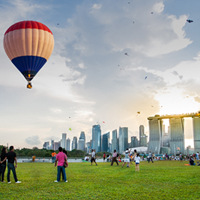
Urban RiverfrontIngolstadt often gets confused with Munich, but this Bavarian city on the Danube has its own distinct identity—one shaped equally by medieval fortifications and 21st-century engineering. Founded in the 14th century, it preserves a striking old town with red-brick Gothic churches and Renaissance palaces, yet the real story here is industrial: Audi's global headquarters sits here, making Ingolstadt a nerve center of automotive innovation rather than a museum piece. The Danube cuts through the city, its banks lined with parks and cycling paths that locals actually use. Beyond the car factories and historic squares, Ingolstadt functions as a working Bavarian city where students, engineers, and families navigate a place that refuses the tourist-trap aesthetic of smaller medieval towns. The Liebfrauenmünster cathedral dominates the skyline. Museums cover everything from local history to contemporary art. The surrounding countryside—farmland, forests, small villages—remains accessible by bike or short train rides, positioning Ingolstadt as a practical base for exploring Bavaria without the crowds or prices of Munich.
 AGS Worldwide Movers
Get Quote
Relocating abroad soon? Make your move with AGS! AGS Worldwide Movers is a leader in the international moving industry. Our experience and expertise allows us to guarantee our clients the best quality moving services.
AGS Worldwide MoversRelocating abroad soon? Make your move with AGS! AGS Worldwide Movers is a leader in the international moving industry. Our experience and expertise allows us to guarantee our clients the best quality moving services.
Get Quote
Visa & Residency
Obtaining a residency in Germany involves several steps and the process can vary depending on the type of visa one is applying for. For expatriates, the most common types of residency visas include the EU Blue Card, Residence Permit for Employment, and Residence Permit for Self-Employed Business Purposes. The EU Blue Card is targeted at highly skilled professionals from non-EU countries who have a job offer in Germany with a minimum salary threshold. Applicants must have a recognized university degree or equivalent. The Residence Permit for Employment is for those who have a specific job offer in Germany, while the Residence Permit for Self-Employed Business Purposes is for entrepreneurs planning to start a business in Germany. To apply for any of these visas, one must first secure a job offer or prove their business plan's viability. The next step is to schedule an appointment with the German embassy or consulate in one's home country to submit the visa application. Required documents typically include a valid passport, proof of health insurance, proof of accommodation in Germany, and relevant certificates or diplomas. For the freelance visa, which is popular among digital nomads, applicants must also provide evidence of their freelance work, such as contracts or letters of intent from potential clients, and prove that their work is in demand in Germany. Once the initial visa is granted, which allows entry into Germany, expatriates must then register with the local residents' registration office and apply for a residence permit to stay longer than the visa's validity. The residence permit application process involves providing additional documentation, such as proof of financial stability and a clean criminal record. The duration of the residence permit can vary, but it is often issued for one year and can be renewed. The EU Blue Card, for example, can lead to permanent residency after 33 months, or 21 months with a B1 level of German language proficiency. Overall, while the process can be bureaucratic and requires thorough preparation, it is generally considered average in terms of difficulty compared to other countries. It is essential to start the application process well in advance of the intended move date and to ensure all paperwork is meticulously completed and accurate.
Cost of Living
Living costs in Ingolstadt remain reasonable for a major industrial city, with housing more affordable than Munich or Stuttgart. The automotive sector's presence has driven some property appreciation, but salaries in engineering and manufacturing sectors tend to offset housing expenses for workers in those fields.
Weather
Ingolstadt experiences a continental climate with cold, snowy winters and warm summers; precipitation is moderate year-round, typical of Bavaria's inland regions.
Healthcare in Ingolstadt
Klinikum Ingolstadt operates as the primary acute-care facility with 24/7 emergency services and departments covering cardiology, orthopedics, and trauma. Secondary clinics and private practices fill gaps, though specialists often require referral to Munich hospitals 80km south for highly specialized procedures.
Schools in Ingolstadt
Several schools in Ingolstadt offer bilingual instruction, primarily German-English programs integrated into standard curricula. These are typically found at gymnasium level and some primary schools, though availability and program depth vary by institution.
Restaurants in Ingolstadt