Guangzhou
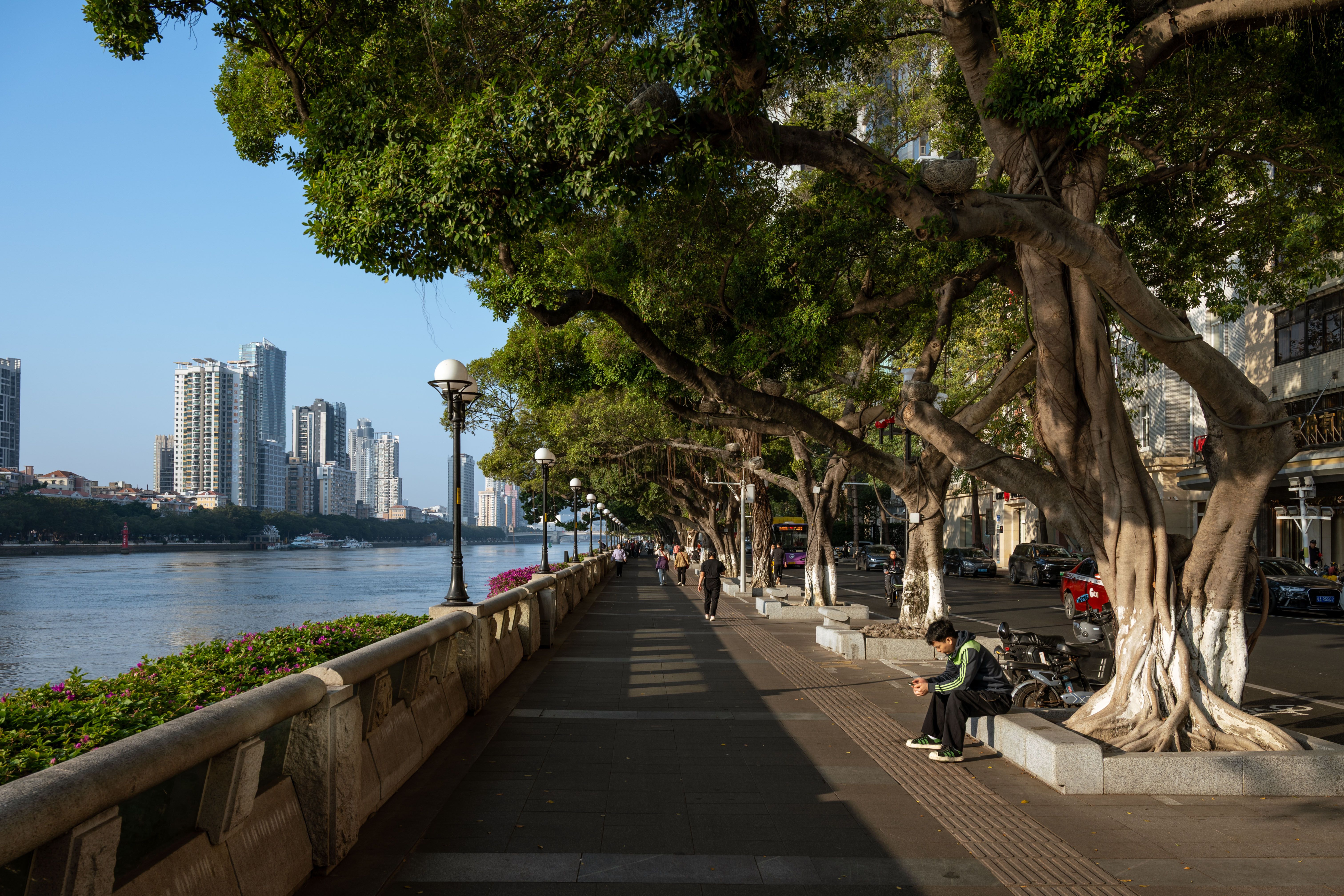
Urban Coastal RiverfrontGuangzhou is a major metropolitan city and capital of Guangdong Province in southern China, serving as one of the country's most important economic and cultural centers. Located in the Pearl River Delta region, it is a bustling hub of commerce, innovation, and trade with a history spanning over 2,000 years. The city blends ancient traditions with cutting-edge modernity, featuring historic temples and traditional neighborhoods alongside gleaming skyscrapers and modern infrastructure. Guangzhou is renowned for its vibrant business district, world-class museums, and dynamic street food culture that reflects its diverse population. The city serves as a major transportation hub with extensive metro systems, ports, and international connectivity. Its strategic location has made it a gateway for international trade and investment, hosting major trade fairs and attracting businesses from around the world. The urban landscape is characterized by tree-lined streets, parks, and waterfront developments along the Pearl River, creating a balance between development and green spaces.
 SJB Global
Connect
SJB-Global is a top-rated financial advisory firm specializing in expat financial advice worldwide, offering retirement planning & tax-efficient solutions with a regressive fee model. Our clients benefit from their country’s most favorable tax environment by utilizing the efficient investment vehicles we offer. Our commitment to quality service is reflected in our stellar reviews, with over 300 testimonials boasting 95% five-star ratings.
Click connect to have our partner contact you via e-mail and/or phone.
SJB GlobalSJB-Global is a top-rated financial advisory firm specializing in expat financial advice worldwide, offering retirement planning & tax-efficient solutions with a regressive fee model. Our clients benefit from their country’s most favorable tax environment by utilizing the efficient investment vehicles we offer. Our commitment to quality service is reflected in our stellar reviews, with over 300 testimonials boasting 95% five-star ratings.
Connect
Click connect to have our partner contact you via e-mail and/or phone.
Visa & Residency
Obtaining a residency in China involves several steps and can be a complex process, depending on the type of visa and the applicant's circumstances. The most common residency visas are the Z Visa, which is issued to expatriates who have obtained employment in China, and the Q Visa, for those who are family members of Chinese citizens or permanent residents. To apply for a Z Visa, the applicant must first secure a job with a Chinese employer. The employer will then apply for an employment license and invitation letter from the local authorities. With these documents, the applicant can apply for the Z Visa at a Chinese embassy or consulate in their home country. Upon arrival in China, the holder of a Z Visa must apply for a Temporary Residence Permit within 30 days to legally reside in the country. This permit is usually valid for the duration of the employment contract, up to a maximum of five years. The Q Visa application process requires an invitation from a Chinese family member and proof of the familial relationship. The applicant must submit these, along with other necessary documents, to the Chinese embassy or consulate. Similar to the Z Visa, upon entering China, the Q Visa holder must apply for a Temporary Residence Permit. Digital nomads often use the M Visa, which is intended for business-related activities such as attending trade fairs or conducting short-term business visits. The M Visa does not lead to residency but allows for multiple entries over a period that can extend up to 10 years, with each stay typically ranging from 30 to 60 days. The difficulty of obtaining a residency visa in China can be considered average, but it requires careful attention to detail and adherence to the specific requirements set by Chinese authorities. The process can be time-consuming and may require assistance from legal professionals or visa agents, especially for those unfamiliar with the Chinese language and legal system. It is important to stay updated on the latest regulations, as Chinese immigration laws can change frequently.
Cost of Living
The cost of living in Guangzhou is moderate compared to other major Chinese cities, though it has risen with the city's economic development and increased international presence. Housing, dining, and transportation costs are reasonable, particularly outside the central business districts. The city offers good value for international residents seeking access to modern amenities and services without the premium prices of tier-one cities like Shanghai or Beijing.
Weather
Guangzhou has a subtropical climate with hot, humid summers and mild winters, experiencing significant rainfall during the monsoon season from April to September.
Healthcare in Guangzhou
Guangzhou has well-developed healthcare infrastructure with several top-tier hospitals including Sun Yat-sen University hospitals and Guangzhou Medical University Hospital. The city offers modern medical facilities, English-speaking staff at major hospitals, and comprehensive healthcare services. Both public and private healthcare options are available to residents and expatriates.
Schools in Guangzhou
Guangzhou has several established international schools including Guangzhou International School (GIS), which offers IB programs, and Nansha International School. These schools provide curricula aligned with international standards and serve expatriate and local families seeking English-medium education.
Guangzhou offers multiple bilingual schools that combine Chinese and English instruction, such as Guangzhou Huamei International School and various other institutions. These schools cater to families wanting their children to maintain bilingual proficiency while studying in Guangzhou.
Restaurants in Guangzhou