Cyprus
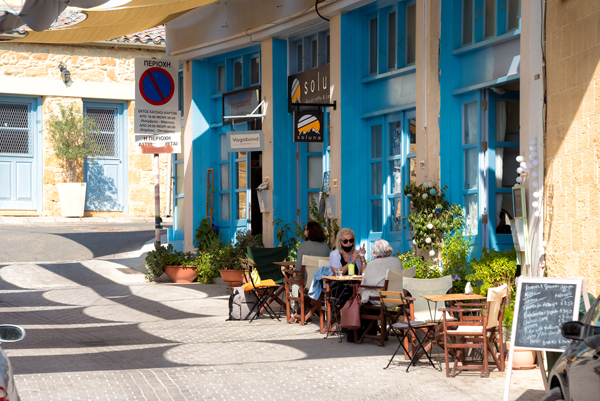
Coastal BeachesCyprus is an island nation in the eastern Mediterranean Sea, located south of Turkey and west of Syria. Known for its stunning beaches, ancient history, and Mediterranean charm, Cyprus offers a blend of modern European living with traditional culture. The economy is relatively stable, with tourism, shipping, and financial services as major industries. The island has a rich cultural heritage spanning thousands of years, with Greek and Turkish influences evident in its architecture, cuisine, and traditions. Life in Cyprus is generally relaxed and welcoming, with a strong emphasis on community, family, and outdoor activities. The island attracts expatriates seeking a warm climate, affordable living compared to Western Europe, and a high quality of life.
 SJB Global
Connect
SJB-Global is a top-rated financial advisory firm specializing in expat financial advice worldwide, offering retirement planning & tax-efficient solutions with a regressive fee model. Our clients benefit from their country’s most favorable tax environment by utilizing the efficient investment vehicles we offer. Our commitment to quality service is reflected in our stellar reviews, with over 300 testimonials boasting 95% five-star ratings.
Click connect to have our partner contact you via e-mail and/or phone.
SJB GlobalSJB-Global is a top-rated financial advisory firm specializing in expat financial advice worldwide, offering retirement planning & tax-efficient solutions with a regressive fee model. Our clients benefit from their country’s most favorable tax environment by utilizing the efficient investment vehicles we offer. Our commitment to quality service is reflected in our stellar reviews, with over 300 testimonials boasting 95% five-star ratings.
Connect
Click connect to have our partner contact you via e-mail and/or phone.
Podcasts

Episode 8: Jake Barber - The Expat Finance Expert Returns


Episode 6: Jake Barber - Expat Finance Expert and Lifelong Expat
Living in Cyprus
Best Places to Live in Cyprus
Visa & Residency
Obtaining a residency in Cyprus involves several steps and the process can vary depending on the type of visa one is applying for. For expatriates looking to reside in Cyprus, the most common types of residency visas are the Category F Visa, which is a long-term residency visa, and the Temporary Residence Permit. The Category F Visa is suitable for individuals who can prove they have a steady income from abroad, such as pensions or investments, sufficient enough to live in Cyprus without working. Applicants must provide evidence of their financial stability, a clean criminal record, and may be required to purchase property in Cyprus. This visa does not allow the holder to work in Cyprus. The Temporary Residence Permit, often referred to as the Pink Slip, is for individuals who intend to stay in Cyprus for more than three months and is popular among expats who are employed or own a business in Cyprus. To apply for this permit, one must provide proof of employment or business ownership, financial sufficiency, and health insurance. The Pink Slip is usually valid for one year and can be renewed annually. For digital nomads, the typical choice is a Short-stay or travel visa, which allows them to live in Cyprus for up to 90 days within any 180-day period. This visa is easier to obtain and does not require proof of financial means or a criminal record check. However, it does not allow for long-term residency or the right to work in Cyprus. The process of obtaining a residency visa in Cyprus is considered to be of average difficulty. It requires gathering various documents, such as proof of income, health insurance, and a rental agreement or property deed. Applicants must submit their application to the Civil Registry and Migration Department or a Cypriot consulate in their home country. The processing time can vary, but it generally takes several months for a decision to be made. It is advisable for applicants to consult with the Cypriot embassy or a legal professional for guidance through the process.
Healthcare in Cyprus
The system in Cyprus is a mix of public and private services. The public healthcare system is funded by taxes and is available to all citizens and residents. It provides a range of services from primary care to specialized treatments. The quality of public healthcare is generally good, with well-trained medical staff and adequate facilities, although there can be long waiting times for certain treatments. Private healthcare in Cyprus offers an alternative, with shorter waiting times and more luxurious facilities, but at a higher cost. Expats and digital nomads who become residents in Cyprus can access public healthcare by paying into the social security system, while emergency services are available to everyone. Private health insurance is also an option for those who prefer private care or are not eligible for public healthcare.
Cost of Living
Cyprus offers relatively affordable living compared to Western Europe, though costs have risen in recent years. Rental prices vary significantly by location: a one-bedroom apartment in central Nicosia or Limassol ranges from €400–700 monthly, while outside city centers it may be €300–500. Property purchase prices average €2,500–4,500 per square meter in popular areas. Daily expenses such as groceries, dining, and utilities are moderate, making overall cost of living reasonable for EU standards.
Weather
Cyprus experiences a Mediterranean climate with hot, dry summers and mild, wet winters. Summer temperatures typically range from 28–35°C (82–95°F), while winter temperatures average 8–15°C (46–59°F). Rainfall is concentrated between November and March, with very little precipitation during summer months. The island enjoys approximately 300 days of sunshine annually, making it one of Europe's sunniest destinations.
Educational System in Cyprus
The educational system in Cyprus is known for its high standards and is structured to provide a comprehensive learning experience for students. Education in Cyprus is compulsory from the age of 5 to 15, which includes six years of primary education and three years of lower secondary education. After completing lower secondary education, students can choose to continue to upper secondary education, which lasts for another three years and is divided into the Lyceum (general education) and Technical Vocational Education (TVE). The Lyceum prepares students for higher education, while TVE provides vocational training. The school year typically starts in September and ends in June, with major breaks during Christmas and Easter. Cypriot students graduate from upper secondary education around the age of 18, after which they can attend university, either locally or abroad. The education system in Cyprus is well-regarded for its quality, with a literacy rate close to 99%. Schools in Cyprus follow a curriculum that includes Greek language, mathematics, science, history, and other subjects, with English being taught as a second language from the first grade. For families moving to Cyprus, there are also private international schools that offer education in English and follow different curricula such as the British or American systems, which might be more familiar to expatriate students.
Universities in Cyprus
The university system in Cyprus has grown significantly in recent years, with both public and private institutions offering a wide range of undergraduate and postgraduate programs. Universities in Cyprus typically follow the Bologna Process, which standardizes higher education across Europe. An undergraduate degree usually takes three to four years to complete, while a master's degree takes one to two years, and a doctorate (PhD) can take three years or more. The academic year is divided into two semesters, with a third summer semester being optional at some institutions. Universities in Cyprus offer programs in fields such as humanities, sciences, engineering, business, and health sciences, among others. The language of instruction is mainly Greek, but there is a growing number of programs offered in English, especially at the postgraduate level, to cater to international students. The cost of attending university in Cyprus is generally lower compared to other European countries, and there are scholarships and financial aid options available for both local and international students. Living expenses in Cyprus are also considered reasonable. For international students, studying in Cyprus provides an opportunity to experience a unique blend of cultures, a high quality of life, and a safe and friendly environment.
Living in Cyprus
Moving to Cyprus