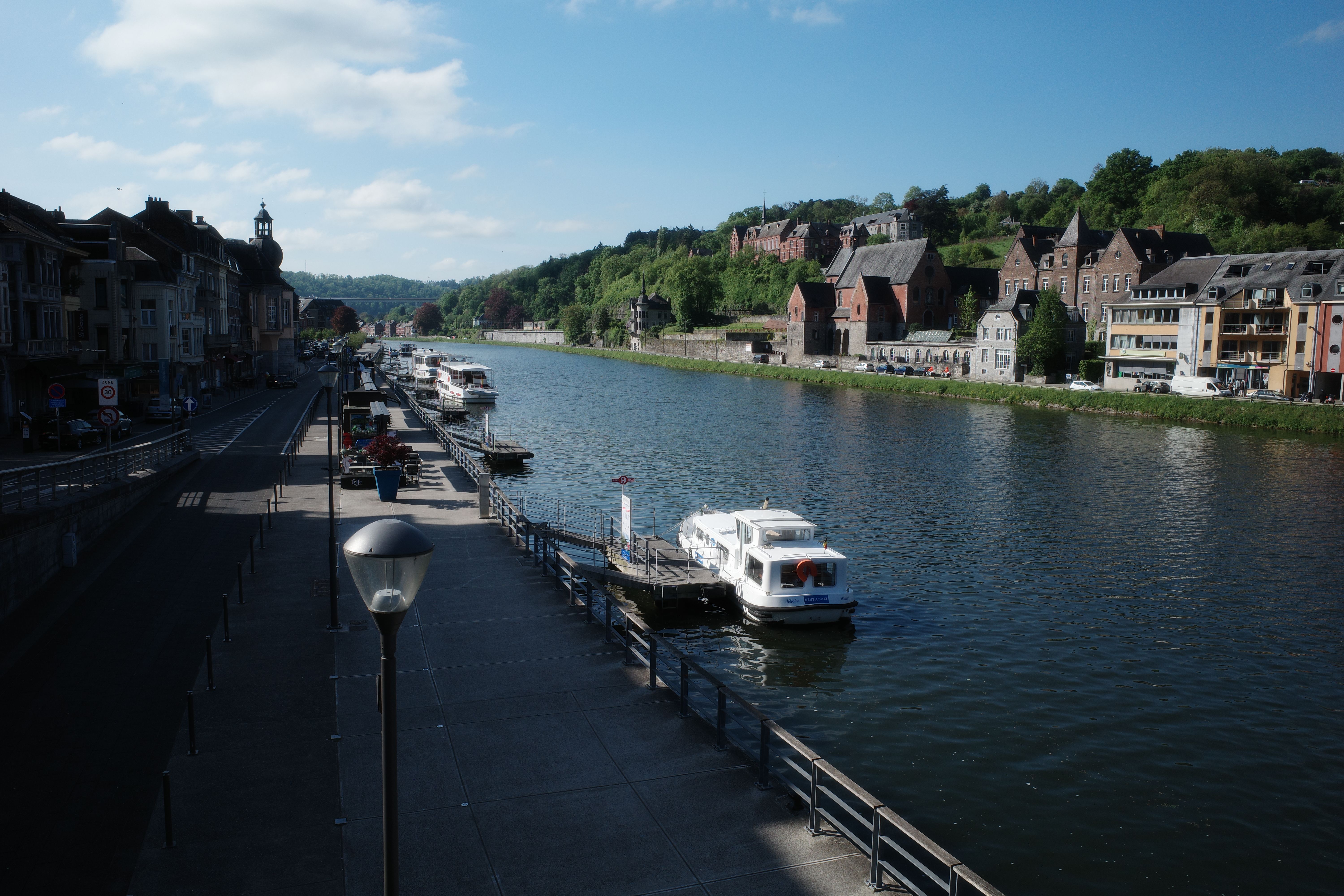
Namur
Urban RiverfrontNamur sits at the confluence of the Meuse and Sambre rivers in southern Belgium, a place where medieval fortifications meet everyday Belgian life. The city pulses with a quieter rhythm than Brussels or Antwerp—walkable, manageable, with genuine character rather than tourist polish. The Citadel dominates the skyline, a 17th-century fortress perched on a dramatic promontory that you can't miss from anywhere in town. The old quarter clusters below with narrow streets, local cafés, and the kind of restaurants where people actually eat, not just pose. Namur functions as a regional hub for Wallonia, so there's real commerce and culture happening—museums, galleries, theater—without feeling overrun. The river setting gives the place a natural rhythm; locals walk along the quays, and the water defines how the city breathes. It's the kind of place where you can spend an afternoon wandering without a plan and stumble into something genuine. The architecture ranges from Renaissance townhouses to 19th-century civic buildings, layered with the everyday texture of a working Belgian city. If you're looking for intensity and nightlife, you'll find it elsewhere; Namur rewards people who move at its pace.
 BlueCross BlueShield Global Solutions
Get Quote
BlueCross BlueShield Global Solutions (BCBS) offers global health plans for international assignments or trips lasting 6 months or longer. With access to over 1.7M medical providers in 190 countries around the world, BCBS provides members with solutions and industry-leading digital services - ensuring top-quality coverage to people who live, work, study and travel internationally.
BlueCross BlueShield Global SolutionsBlueCross BlueShield Global Solutions (BCBS) offers global health plans for international assignments or trips lasting 6 months or longer. With access to over 1.7M medical providers in 190 countries around the world, BCBS provides members with solutions and industry-leading digital services - ensuring top-quality coverage to people who live, work, study and travel internationally.
Get Quote
Visa & Residency
Obtaining a residency in Belgium involves several steps and the process can vary depending on the type of visa one is applying for. For expats, the most common types of residency visas include the Professional Card and the Family Reunification Visa. The Professional Card is for those who want to work as self-employed individuals in Belgium. To obtain this, applicants must demonstrate that their business activities will be beneficial to the Belgian economy. The process involves submitting a detailed business plan, proof of sufficient funds to support oneself, and relevant professional experience. The Family Reunification Visa is for individuals who have family members residing in Belgium. Applicants must prove their relationship with the resident and that the resident can support them financially. The general process for obtaining a residency visa in Belgium starts with submitting an application to the Belgian consulate or embassy in one's home country. This includes completing the necessary forms, providing a valid passport, and submitting additional documents such as proof of health insurance, a certificate of good conduct, and evidence of accommodation in Belgium. After the initial approval, one may need to undergo a medical examination. Once in Belgium, the applicant must register with the local municipality, which involves providing biometric data and receiving a residence card. The difficulty of the process can be considered average, but it requires careful preparation of documents and an understanding of the specific requirements for the chosen visa category. It is advisable to start the application process well in advance of the intended move date, as processing times can vary. Additionally, proficiency in one of Belgium's official languages (Dutch, French, or German) can be beneficial during the application process and for integration into Belgian society.
Cost of Living
Living in Namur costs noticeably less than Belgium's major cities—rent and property prices sit well below Brussels levels, and everyday expenses like groceries and dining out remain reasonable. As a regional center rather than a capital, Namur offers genuine affordability without sacrificing access to services, culture, or infrastructure. You get solid Belgian quality of life without the premium you'd pay in Antwerp or the capital.
Weather
Namur experiences a temperate oceanic climate with mild summers and cool, damp winters typical of Belgium, with frequent cloud cover and moderate rainfall throughout the year.
Healthcare in Namur
CHR Citadelle, the main public hospital, handles general medicine and emergency care with adequate capacity for a city of 110,000, though serious cases sometimes transfer to Liège facilities. Private clinics exist but are limited; most residents rely on the public system and scattered general practitioners throughout the city.
Schools in Namur
Several schools in Namur offer bilingual instruction, primarily French-Dutch or French-English programs, reflecting Belgium's linguistic landscape and proximity to the Netherlands. These schools serve both local families and expatriates seeking multilingual education options.
Local Schools
Restaurants in Namur