Tallinn
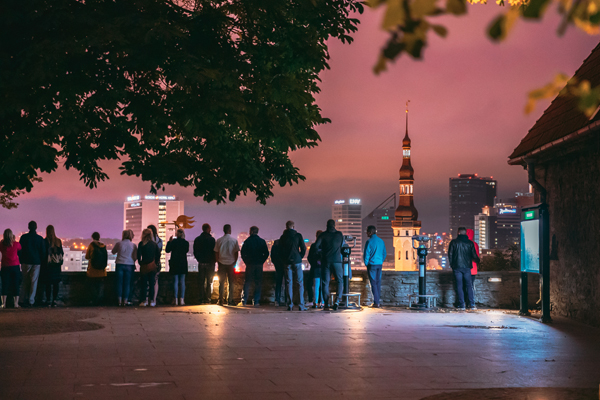
Urban Coastal BeachesTallinn's medieval Old Town, a UNESCO World Heritage site, rises from the Baltic coast with cobblestone streets and spired churches that have survived centuries of occupation and reinvention. Once a Hanseatic League trading hub, the city was shaped by Danish, Swedish, German, and Russian rule before Estonia's independence in 1991. Today Tallinn blends that layered past with a forward-thinking present—it's become a global center for digital innovation and e-governance, earning a reputation as the 'Silicon Valley of Europe.' The lower town bustles with cafes, galleries, and restaurants; the upper town (Toompea) commands views from its hilltop fortress. Beyond the Old Town, Soviet-era apartment blocks give way to parks, pine forests, and a waterfront that opens onto the Gulf of Finland. The city draws history buffs, tech entrepreneurs, and travelers seeking authentic Baltic culture without the polish of Western European capitals.
 PassportCard Expat Health Insurance
Get Quote
Never worry about paying your medical bills out of pocket again. The innovative PassportCard allows for a stress-free experience for all expat families, remote travelers, and workers. With a 24/7 customer service and an outstanding customer base of over 2 Million clients, it will feel like medical care at home. Get up to 10% off on your policy now.
PassportCard Expat Health InsuranceNever worry about paying your medical bills out of pocket again. The innovative PassportCard allows for a stress-free experience for all expat families, remote travelers, and workers. With a 24/7 customer service and an outstanding customer base of over 2 Million clients, it will feel like medical care at home. Get up to 10% off on your policy now.
Get Quote
Visa & Residency
Obtaining a residency in Estonia involves several steps and can be considered an average challenge compared to other countries. Expats looking to reside in Estonia typically apply for a Temporary Residence Permit or a Long-Stay (D) Visa. The Temporary Residence Permit is suitable for those who intend to stay longer than 90 days and can be granted for various reasons such as work, study, business, or for family reasons. The application process involves submitting a filled-out application form, a valid travel document, a photo, and documents proving the purpose of stay, such as a work contract or a letter from an educational institution. Additionally, applicants must provide proof of legal income, health insurance, and may need to pass an Estonian language test depending on the basis of their application. For digital nomads, Estonia has introduced a Digital Nomad Visa which allows remote workers to live in Estonia and legally work for their employer or their own company registered abroad. This visa can be issued for a short stay of up to 90 days or a long stay of up to 1 year. To qualify, applicants must prove that they can perform their work duties regardless of location and have a stable income of at least €3504 (gross of tax) per month for the six months preceding the application. The process for both types of visas requires thorough preparation and attention to detail when gathering the necessary documentation. Applicants must submit their applications either at an Estonian Embassy or Consulate or, if legally in Estonia, at the Police and Border Guard Board. It is important to note that the processing time can take several months, so it is advisable to apply well in advance of the planned move. Overall, while the process is bureaucratic and requires various proofs and documentation, it is generally well-structured and manageable for those who meet the criteria.
Cost of Living
Tallinn is considerably cheaper than Western European cities, though prices have climbed since Estonia joined the EU. Rent for a one-bedroom apartment in the city center runs moderate; outside the Old Town it drops noticeably. Groceries, dining, and public transport remain affordable compared to Scandinavia or Germany, making it accessible for both locals and expats on modest budgets.
Weather
Tallinn has a temperate maritime climate with cold, dark winters (December to February average around -3°C) and mild summers (June to August around 17°C), with frequent cloud cover and moderate rainfall year-round.
Healthcare in Tallinn
East Tallinn Central Hospital and North Estonia Medical Centre provide primary acute care and specialist services across multiple departments. Both facilities meet EU standards and serve as teaching hospitals; English-speaking staff availability varies by department. Tallinn has adequate capacity for routine and emergency care, though complex cases sometimes require referral to larger centers.
Schools in Tallinn
Tallinn has several international options including Tallinn English College (IB curriculum), Lasnamäe Russian School with English-language tracks, and smaller international programs embedded in Estonian schools. Most serve expat families and follow either IB or Cambridge curricula.
Estonian-English bilingual education is standard in many public schools, particularly in central Tallinn. Private schools like Koolibri and several Montessori programs offer dual-language instruction, though true bilingual immersion (50/50 split) is less common than English-heavy international tracks.
Restaurants in Tallinn