Venice
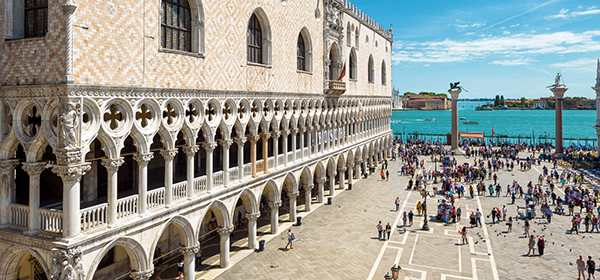
Urban CoastalVenice is a city of roughly 260,000 people built across more than a hundred islands in a lagoon, where water replaces streets and boats replace cars. The population has shifted dramatically over centuries—medieval merchants and traders gave way to artists, intellectuals, and now a mix of locals determined to stay, remote workers drawn by the romance of the place, and tourists passing through. The city's architecture spans Byzantine, Gothic, and Renaissance styles, with the Basilica di San Marco and the Doge's Palace standing as monuments to its former power as a maritime republic. Daily life unfolds along narrow calli (alleyways) that open suddenly onto campo (squares), where residents gather at cafes and markets. The Grand Canal curves through the center like a main street, lined with palaces that once housed merchant families. Gondolas still operate, though most locals use vaporetti (water buses) for practical transport. The lagoon itself—shallow, brackish, and constantly shifting—shapes everything: flooding during acqua alta (high water) is a seasonal reality, not a disaster. The city's isolation from mainland Italy, combined with its sinking foundations and environmental fragility, creates a unique tension between preservation and survival that residents navigate daily.
 Italian For A While
Connect
Become ‘Italian for a While’ with IFA! Learn in Italy on a 1-week to 12-month program - open to students, young adults, graduates, digital nomads, professionals, groups, faculty-led programs, and more. Take courses at an accredited school while immersing yourself in the language, life, and culture among your international peers. Submit an inquiry with IFA to learn more.
Click connect to have our partner contact you via e-mail and/or phone.
Italian For A WhileBecome ‘Italian for a While’ with IFA! Learn in Italy on a 1-week to 12-month program - open to students, young adults, graduates, digital nomads, professionals, groups, faculty-led programs, and more. Take courses at an accredited school while immersing yourself in the language, life, and culture among your international peers. Submit an inquiry with IFA to learn more.
Connect
Click connect to have our partner contact you via e-mail and/or phone.
Visa & Residency
Obtaining a residency in Italy involves several steps and the process can vary depending on the type of visa you are applying for. The most common types of visas for expats include the Elective Residence Visa and the Work Visa. The Elective Residence Visa is designed for individuals who can prove they have a high, steady income from sources outside of Italy and do not need to work in the country. Applicants must show they have sufficient funds to support themselves, a place to live, and comprehensive health insurance. This visa is valid for one year and can be renewed. The Work Visa is for those who have secured a job in Italy before entering the country. The employer must apply for a work permit on behalf of the employee, which is subject to quotas. Once the work permit is granted, the employee can apply for the visa. This process can be quite competitive and time-consuming due to the quota system. Other visas include the Student Visa and Family Reunification Visa. The process generally involves gathering the required documentation, such as a valid passport, proof of financial means, accommodation, and health insurance, and submitting an application to the Italian consulate or embassy in your home country. An appointment is usually required, and you may need to attend an interview. The difficulty of the process can vary; it is often described as average, but it can be challenging due to the bureaucracy and strict requirements. It is advisable to start the application process well in advance of your intended move date and to seek assistance from professionals if necessary. Once in Italy, you will need to apply for a residence permit (permesso di soggiorno) within eight days of arrival to stay legally. This additional step involves going to the local post office or police station (Questura) to submit the necessary paperwork. Overall, while the process can be bureaucratic and requires careful preparation, it is manageable with the right planning and support.
Cost of Living
Living in Venice carries substantial costs driven by its isolation, limited space, and dependence on water transport. Housing is expensive and scarce, with rental prices among Italy's highest; many properties require renovation due to moisture and salt damage from the lagoon. Groceries and goods cost more than on the mainland because everything must be transported by boat. Utilities, particularly heating and water management, add to household expenses. The city's status as a UNESCO World Heritage site and major tourist destination has inflated prices across accommodation, dining, and services.
Weather
Venice experiences a humid subtropical climate with cool, wet winters and warm summers; acqua alta (high water flooding) typically occurs from October through April.
Healthcare in Venice
Ospedale dell'Angelo in Mestre, across the lagoon on the mainland, serves as the primary hospital for Venice with emergency departments and surgical facilities. Smaller clinics operate within Venice proper, but serious cases require the 10-minute vaporetto or water ambulance transfer to mainland hospitals. Response times for water-based emergency transport can extend during high tides or adverse weather.
Schools in Venice
Venice has limited but accessible international schooling options, primarily through the International School of Venice, which offers IB programs and serves expat families. Most international education requires commuting to mainland Mestre or relying on distance learning, as the lagoon city's physical constraints limit school infrastructure.
Several bilingual schools operate in Venice and the immediate mainland area, offering Italian-English instruction at primary and secondary levels. These schools cater to mixed families and expat communities seeking dual-language education without full relocation to larger Italian cities.
Restaurants in Venice