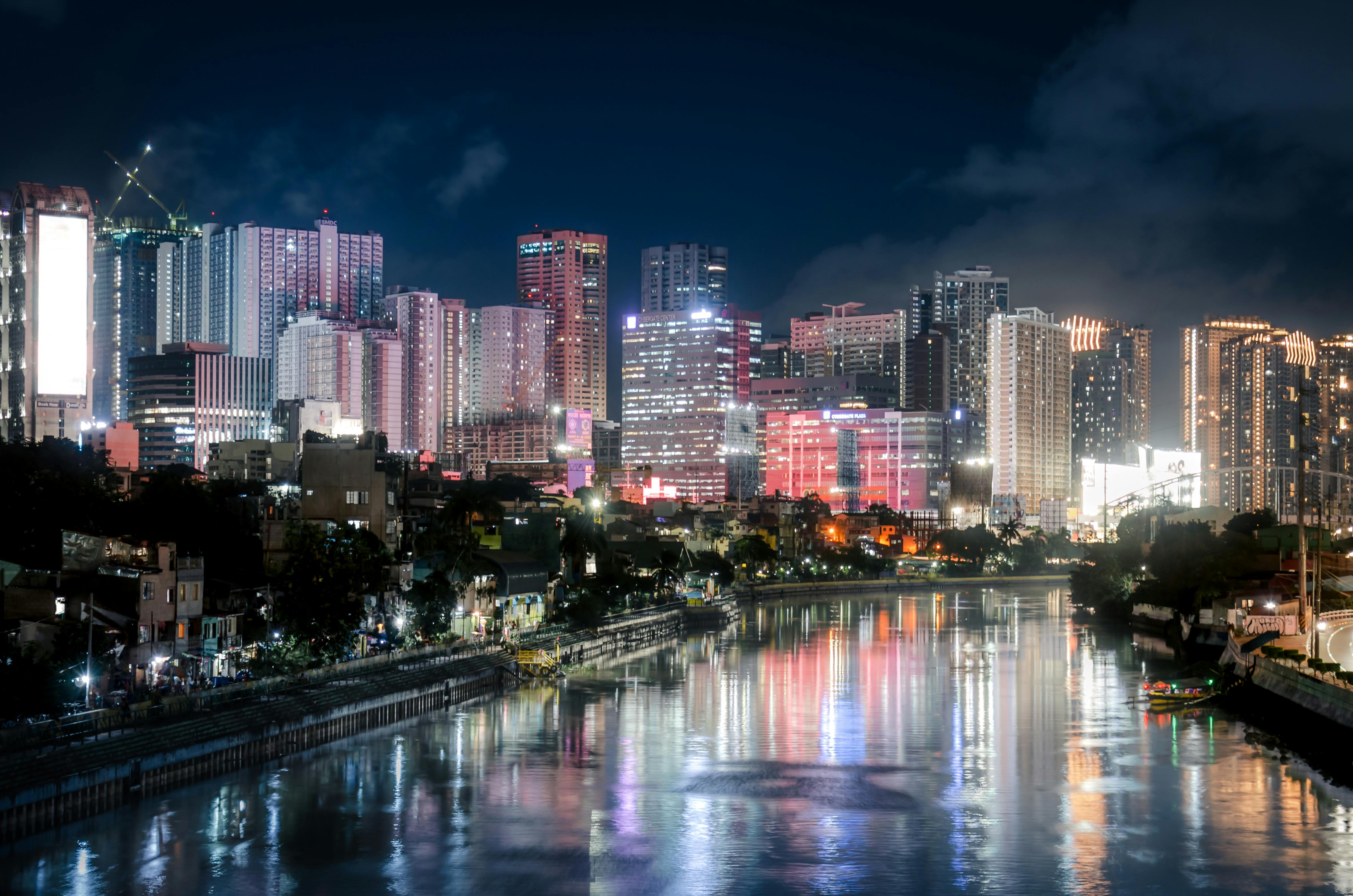
Makati City
Urban RiverfrontMakati City rises from Manila's southern edge as the Philippines' premier financial and commercial hub, where glass towers line avenues that pulse with deal-making energy and foot traffic. The district's transformation from swampland in the 1950s to Asia's gleaming business center happened in decades, leaving behind a landscape of sharp contrasts—luxury malls and five-star hotels stand blocks from older residential neighborhoods where families have lived for generations. The Makati Central Business District anchors the city, home to the country's largest corporations, banks, and multinational offices. Beyond the corporate spine, tree-lined streets in neighborhoods like Bel-Air and Forbes Park shelter substantial homes behind high walls. The city's restaurants, bars, and entertainment venues draw crowds nightly; Makati Avenue and the Poblacion district throb with nightlife. Traffic congestion is relentless during rush hours, a price of density and prosperity. Art galleries, museums, and cultural spaces dot the landscape, while parks like Ayala Triangle Gardens offer green respite. Makati's infrastructure—reliable electricity, modern telecommunications, efficient roads—sets it apart from much of Metro Manila, making it the preferred address for professionals, expatriates, and businesses seeking stability and convenience.
 PassportCard Expat Health Insurance
Get Quote
Never worry about paying your medical bills out of pocket again. The innovative PassportCard allows for a stress-free experience for all expat families, remote travelers, and workers. With a 24/7 customer service and an outstanding customer base of over 2 Million clients, it will feel like medical care at home. Get up to 10% off on your policy now.
PassportCard Expat Health InsuranceNever worry about paying your medical bills out of pocket again. The innovative PassportCard allows for a stress-free experience for all expat families, remote travelers, and workers. With a 24/7 customer service and an outstanding customer base of over 2 Million clients, it will feel like medical care at home. Get up to 10% off on your policy now.
Get Quote
Visa & Residency
The process of obtaining a residency in the Philippines varies depending on the type of visa applied for. The Special Resident Retiree's Visa (SRRV) is a popular option for expatriates and retirees. To qualify for the SRRV, applicants must meet certain age and deposit requirements, which vary depending on the chosen SRRV option. For instance, the SRRV Smile requires a deposit of $20,000 in a Philippine bank for applicants 35 years old and above. The SRRV Classic, on the other hand, requires a deposit of $10,000 for those 50 years old and above with a pension, or $20,000 without a pension. This visa grants indefinite stay with multiple-entry privileges as long as the deposit is maintained. Another common visa for expatriates working in the Philippines is the 9(g) Pre-arranged Employment Visa, which is tied to an offer of employment from a Philippine-based company. The process involves securing an Alien Employment Permit, a No Objection Certificate, and other clearances before the visa application can be filed with the Bureau of Immigration. The 9(g) visa is typically valid for one to three years and is extendable as long as the employment persists. The application process for residency visas in the Philippines can be average in terms of difficulty. It involves gathering various documents, such as police clearances, medical certificates, and proof of financial capacity. The applicant must also attend a hearing and interview at the Bureau of Immigration. The processing time can vary, and it is advisable to seek assistance from a legal professional or a visa agent to navigate the complexities of the process. Overall, while there are several steps involved, the Philippines offers a range of visa options to suit different needs, and with proper guidance, obtaining a residency visa can be a manageable task.
Cost of Living
Living in Makati demands a substantial budget. Residential rents for modern apartments in prime locations rival those of major Asian cities, while property purchases command premium prices reflecting the district's status and limited land availability. Dining, entertainment, and imported goods cost significantly more than in other Metro Manila areas, though local markets and neighborhood eateries offer more affordable alternatives for those willing to venture beyond the business district's polished veneer.
Weather
Makati experiences a tropical climate with a hot, humid dry season from November to May and a wet monsoon season from June to October, with temperatures typically ranging from 24°C to 32°C year-round.
Healthcare in Makati City
Makati Medical Center and Asian Hospital are both Joint Commission-accredited facilities with 24-hour emergency departments, ICU capacity, and English-speaking staff; both handle complex cases and serve as referral centers for Metro Manila. St. Luke's Medical Center (nearby in BGC) offers similar standards. Out-of-pocket costs run high for uninsured patients, though many expats carry international health insurance.
Schools in Makati City
Makati hosts several internationally accredited institutions including De La Salle University-Integrated School, British School Manila, and Makati Science High School with IB programs. These schools follow curricula aligned with international standards and serve both Filipino and expatriate families.
Multiple schools operate bilingual programs combining English and Filipino instruction, with institutions like Southville Schools and various Catholic schools offering dual-language tracks. These programs are standard across many private institutions in the district.
Restaurants in Makati City