Bydgoszcz
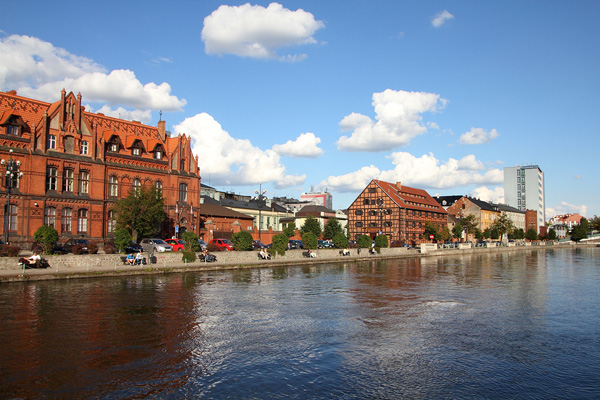
Urban RiverfrontBydgoszcz emerged in the 13th century as a Hanseatic trading post on the Brda River, and its mercantile DNA still shapes the city today. The Old Town, rebuilt after World War II devastation, centers on a vast market square ringed by colorful Renaissance and Baroque facades—a deliberate restoration that honors what was lost. Modern Bydgoszcz has grown into Poland's ninth-largest city, a regional hub for culture, education, and light industry without the overwhelming scale of Warsaw or Kraków. The city's character splits between its historic core and sprawling residential neighborhoods that house around 350,000 people. Water defines the place: the Brda River winds through the center, and an ambitious canal system—the Bydgoszcz Canal, built in the 19th century—connects it to the Vistula and beyond, a feat of engineering that once made the city a crucial transport node. Today the waterways are recreational anchors, lined with parks and cycling paths. Bydgoszcz has cultivated a reputation as Poland's cycling capital, with extensive bike infrastructure threading through the city. The cultural scene punches above its weight: theaters, galleries, and music venues draw visitors from across the region. It's a place where Polish provincial life—affordable, walkable, genuinely lived-in—meets real urban amenities.
 BlueCross BlueShield Global Solutions
Get Quote
BlueCross BlueShield Global Solutions (BCBS) offers global health plans for international assignments or trips lasting 6 months or longer. With access to over 1.7M medical providers in 190 countries around the world, BCBS provides members with solutions and industry-leading digital services - ensuring top-quality coverage to people who live, work, study and travel internationally.
BlueCross BlueShield Global SolutionsBlueCross BlueShield Global Solutions (BCBS) offers global health plans for international assignments or trips lasting 6 months or longer. With access to over 1.7M medical providers in 190 countries around the world, BCBS provides members with solutions and industry-leading digital services - ensuring top-quality coverage to people who live, work, study and travel internationally.
Get Quote
Visa & Residency
Obtaining a residency in Poland involves several steps and can be considered an average challenge compared to other countries. The process begins with determining the appropriate visa type for your stay. The most common visa for expats seeking residency is the National Visa (Type D), which is intended for those who plan to stay in Poland for more than 90 days. This visa is suitable for various purposes, including work, study, and family reunification. To apply for the National Visa (Type D), applicants must first gather the required documents, which typically include a completed application form, a valid travel document, proof of health insurance, a biometric photo, and documents confirming the purpose of the stay, such as a work contract or university enrollment confirmation. Additionally, applicants must provide evidence of sufficient financial means to support themselves during their stay and a clean criminal record. The application is submitted in person at the Polish consulate or embassy in the applicant's home country or country of legal residence. After submission, the applicant may be required to attend an interview to provide further details about their planned stay in Poland. For digital nomads, Poland offers a specific visa that caters to their needs. This visa allows digital nomads to live and work remotely in Poland for up to a year, with the possibility of extension if they meet certain conditions. The application process for the digital nomad visa is similar to that of the National Visa (Type D), with the addition of proving that the applicant's income comes from sources outside Poland. Once the visa is granted, the holder can enter Poland and must then apply for a temporary residence permit if they plan to stay longer than the visa's validity. This permit can be obtained at the local voivodeship office and requires additional documentation, such as proof of accommodation in Poland. Overall, while the process involves bureaucracy and the gathering of various documents, it is relatively straightforward if all requirements are met. Expats and digital nomads who prepare well and follow the guidelines should find the process manageable.
Cost of Living
Living costs in Bydgoszcz remain well below Western European levels and notably cheaper than Poland's major cities. Rent for a one-bedroom apartment in the city center runs a fraction of Warsaw prices, and groceries, dining, and utilities follow suit. For remote workers and retirees, the affordability combined with solid infrastructure makes the city genuinely livable on modest budgets.
Weather
Bydgoszcz experiences a temperate continental climate with cold winters (often dropping below freezing from December through February) and mild summers. Rainfall is moderate year-round, with the wettest months typically in late spring and early autumn.
Healthcare in Bydgoszcz
The city operates several public hospitals including Szpital Uniwersytecki and Szpital im. Jurasza, with emergency departments and specialist services available. Healthcare quality meets Polish standards, though wait times for non-emergency procedures can extend significantly, and English-speaking medical staff availability varies by facility.
Schools in Bydgoszcz
Bydgoszcz has several international options, including the British School of Bydgoszcz, which follows the English National Curriculum through secondary level. The city also hosts schools offering IB programs and other international curricula, though options are more limited than in Warsaw or Krakow.
Multiple bilingual schools operate in Bydgoszcz, offering Polish-English instruction at primary and secondary levels. These schools typically integrate both languages across subjects rather than teaching them in isolation.
Restaurants in Bydgoszcz