Tokyo
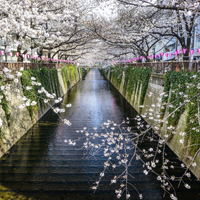
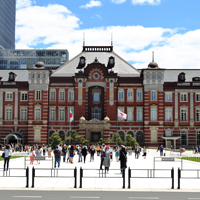
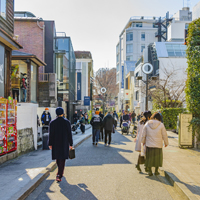
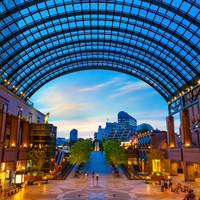
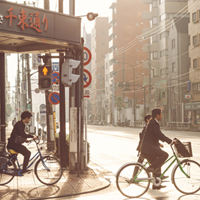
Urban Coastal Beaches RiverfrontTokyo is the capital and largest city of Japan, serving as the nation's political, economic, and cultural center. As a sprawling metropolis, Tokyo seamlessly blends ancient traditions with cutting-edge modernity, featuring historic temples and shrines alongside futuristic skyscrapers and advanced technology. The city is renowned for its efficient public transportation system, vibrant neighborhoods each with distinct character, and world-class dining scene ranging from Michelin-starred restaurants to casual street food vendors. Tokyo's districts offer diverse experiences: the bustling energy of Shibuya and Shinjuku, the traditional atmosphere of Asakusa, the upscale shopping of Ginza, and the youth culture of Harajuku. The city hosts numerous museums, galleries, theaters, and entertainment venues. Tokyo's urban landscape is characterized by dense development, neon-lit streets, and organized chaos that attracts millions of visitors annually. The city maintains strong cultural traditions including tea ceremonies, martial arts, and seasonal festivals while embracing innovation in fashion, gaming, and entertainment.
Podcasts
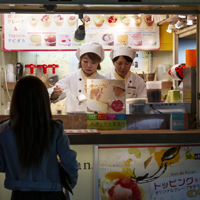
Episode 1: Seventeen Years in Tokyo


 BlueCross BlueShield Global Solutions
Get Quote
BlueCross BlueShield Global Solutions (BCBS) offers global health plans for international assignments or trips lasting 6 months or longer. With access to over 1.7M medical providers in 190 countries around the world, BCBS provides members with solutions and industry-leading digital services - ensuring top-quality coverage to people who live, work, study and travel internationally.
BlueCross BlueShield Global SolutionsBlueCross BlueShield Global Solutions (BCBS) offers global health plans for international assignments or trips lasting 6 months or longer. With access to over 1.7M medical providers in 190 countries around the world, BCBS provides members with solutions and industry-leading digital services - ensuring top-quality coverage to people who live, work, study and travel internationally.
Get Quote
Visa & Residency
Obtaining a residency in Japan involves several steps and the process can be quite meticulous, but it is manageable with the right documentation and preparation. The most common types of residency visas include the Highly Skilled Professional Visa, which is aimed at attracting skilled foreign professionals in certain fields; the Working Visa, for those with job offers in Japan in various categories such as Engineer, Specialist in Humanities, or International Services; and the Spouse or Child of Japanese National Visa, for those who have a family connection to a Japanese citizen. The process typically starts with securing a job offer or sponsorship from a Japanese company or individual, which is necessary for most types of work-related visas. The sponsor in Japan will often assist in the application process and provide necessary documentation, such as a Certificate of Eligibility (COE), which is required to apply for the visa at a Japanese embassy or consulate in the applicant's home country. Applicants must submit the COE, a valid passport, visa application form, photograph, and any additional required documents specific to the type of visa they are applying for. The requirements can vary greatly depending on the visa category, so it is crucial to check the specific criteria for the chosen visa type. Once the application is submitted, it can take several weeks to several months for the Japanese authorities to process the visa. If approved, the applicant will receive a visa that allows them to enter Japan. Upon arrival, they must register their residence at the local municipal office and apply for a Residence Card, which is necessary for daily life in Japan. The difficulty of the process can vary based on the applicant's circumstances and the type of visa. Some visas, like the Highly Skilled Professional Visa, have a points-based system and require proof of advanced education and specialized skills. Others, like the Spouse or Child of Japanese National Visa, may have more straightforward criteria but still require substantial documentation to prove the family relationship. Overall, while the process is systematic and can be time-consuming, it is generally considered average in difficulty compared to other countries, provided that the applicant meets the eligibility criteria and has all the necessary documentation in order.
Cost of Living
The cost of living in Tokyo is high, particularly for housing, dining, and entertainment in central areas. Accommodation prices, especially in desirable neighborhoods, are among the most expensive in the world. However, costs can vary significantly by district, and public transportation, utilities, and some food items remain relatively affordable compared to other major global cities.
Weather
Tokyo experiences a humid subtropical climate with four distinct seasons: warm, humid summers with temperatures often exceeding 30°C (86°F), mild springs and autumns, and cool winters averaging around 5°C (41°F) with occasional snow.
Healthcare in Tokyo
Tokyo has excellent healthcare facilities with modern hospitals and clinics offering advanced medical technology and English-speaking staff in major institutions. The healthcare system is efficient and well-regulated, with easy access to both emergency and routine care. Many hospitals are conveniently located throughout the city with good transportation links.
Schools in Tokyo
Tokyo has numerous international schools including the American School in Japan (ASIJ), British School in Tokyo (BST), and Canadian Academy, offering IB and national curriculum programs. These schools serve the expatriate community and Japanese families seeking English-language education with strong academic standards.
Tokyo offers several bilingual schools such as Nishimachi International School and Seisen International School, which provide Japanese-English dual-language instruction. These schools blend Japanese and international curricula, preparing students for both local and global contexts.
Local Schools
Restaurants in Tokyo